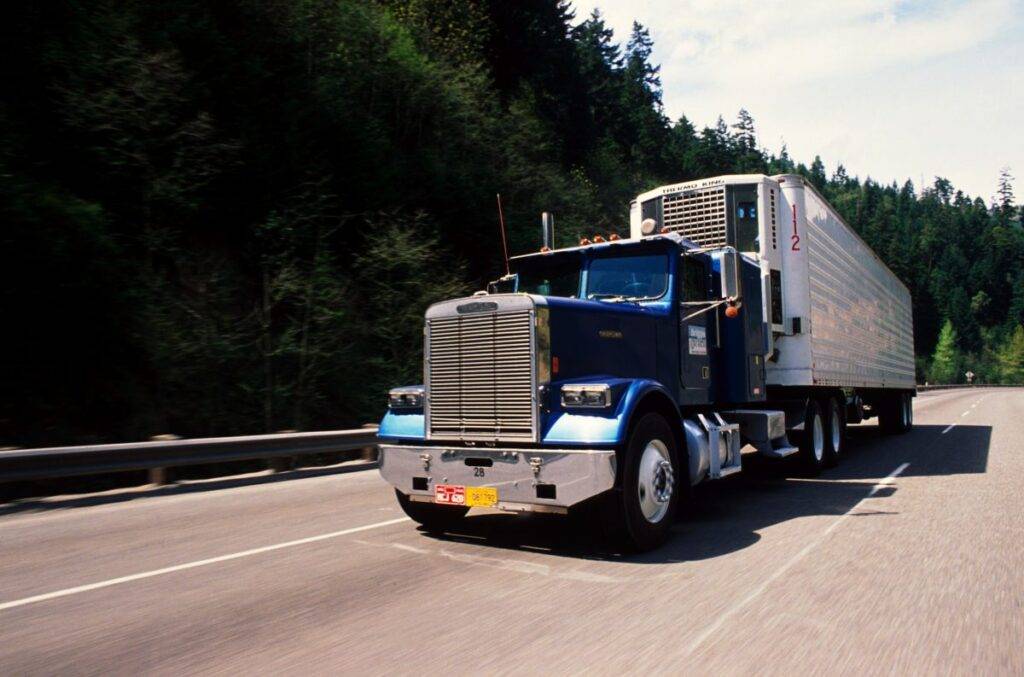
- Uber enters the trucking scene, buys startup Otto
- Goal: line of autonomous trucks called Uber ATG
Get Commercial Truck Financing Now!
It’s 2017 and we are living in what is called a “sharing economy.” Though considered an umbrella term with various different meanings, the “sharing economy” is widely used to describe today’s market landscape. Everything has gone digital – online transactions and interactions are all the rage, and the market has taken notice of that and jumped on the bandwagon. In general terms, the “sharing economy” is sort of a grassroots effort, a peer-to-peer business landscape rather than a corporate one. This is shown through organizations like Uber, Airbnb, Takl, Turo, Upwork, and Lyft.“Our goal is to make trucks drive as humanly as possible, but with the reliability of machines.”
 In other words, the sharing economy is “an economic model in which individuals are able to borrow or rent assets owned by someone else.” It has a more democratic marketplace feel, like freelancing. Uber has been so heavily at the forefront of this trend that the term is often referred to as “Uberization.” People are utilizing their local community to both sell and obtain products and services, instead of going through a corporate funnel. Uber has recently added to its arsenal with startup Otto.
Uber Acquires Otto: The Back Story
- Otto was created by Lior Ron and Anthony Levandowski
- Purchased by Uber in 2016
- Focus on autonomous vehicle research
- AI acts as “copilot” to make truck drivers’ jobs easier and safer

“We want to get technology to the point where it’s safe to let the driver rest and sleep in his cabin and we can drive for him, exit to exit.”
This mission is also driven by the desire to make the roads safer for drivers and trucking easier and safer for truck drivers. One of the leading causes of highway fatalities and injuries is drowsy driving. Drivers are often required to drive up to 11 hours in one day in order to make ends meet. Long hours spent on the road to make long trips can lead to truck drivers falling asleep at the wheel. Unfortunately, this causes injuries and deaths at an alarming rate. More than 30,000 people die on highways annually in the US, and 1 in 7 of those deaths are involved in crashes with large trucks. This is a problem that needs to be fixed, and that’s exactly what Otto wants to solve. “We want to get technology to the point where it’s safe to let the driver rest and sleep in his cabin and we can drive for him, exit to exit,” said Ron.
What Does This Mean for Human Truck Drivers?
- Truckers drive up to 11 hours a day
- AI meant to allow truckers to rest on the road
- AI is a co-pilot, not a replacement
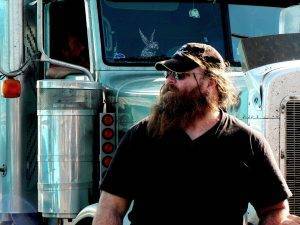 “Being a truck driver is not an easy job,” said Ron. With the long hours and amount of driving, many would agree. The advancements made in autonomous vehicles are meant to help make things easier for truck drivers.
For those worried about job loss, Ron explains that AI is not meant to replace human workers, but rather supplement them. The AI is meant to act as a “copilot” for truck drivers in order to make the job safer and still get done efficiently.
In other words, truck drivers are not in danger of losing their jobs. Artificial Intelligence (AI) is instead meant to be an aide for truck drivers, solving the dangerous prevalence of drowsy driving and other issues. AI is meant to make the job safer, easier, and more efficient.
“Being a truck driver is not an easy job,” said Ron. With the long hours and amount of driving, many would agree. The advancements made in autonomous vehicles are meant to help make things easier for truck drivers.
For those worried about job loss, Ron explains that AI is not meant to replace human workers, but rather supplement them. The AI is meant to act as a “copilot” for truck drivers in order to make the job safer and still get done efficiently.
In other words, truck drivers are not in danger of losing their jobs. Artificial Intelligence (AI) is instead meant to be an aide for truck drivers, solving the dangerous prevalence of drowsy driving and other issues. AI is meant to make the job safer, easier, and more efficient.
Get Commercial Truck Financing Now!