
If you’re looking at a piece of equipment your business needs and you’re not planning to pay cash, you have three real options: finance it, lease it, or rent it. All three get the equipment on the job site. The right one depends on how long you need it, whether you want to own it, and what your current cash and credit situation looks like.
The answer isn’t the same for every business or every piece of equipment. A contractor who needs a skid steer for one three-week job is in a different situation than one who needs a skid steer for every job they do. This article lays out how each option works, when it makes the most financial sense, and where the math changes.
TLDR:
- Rent when you need equipment for a short project or occasional use; high daily cost, but no commitment.
- Lease when you need equipment for a defined period and want flexibility at the end; return it, renew, or buy it.
- Finance when you’ll use the equipment regularly and want to own it; the most cost-effective path for long-term use.
- Rental rates can exceed financing costs quickly. For equipment used more than a few weeks per month, the math usually favors financing or leasing.
- All three options are available to businesses with imperfect credit or limited history, though terms vary.
Need Financing? Get Pre-Qualified Today!
How Each Option Works

Equipment Financing
With equipment financing, also called an equipment finance agreement (EFA) or equipment loan, a lender provides the funds to purchase the equipment, and the business repays that amount plus a financing cost over a fixed term. The equipment serves as collateral. At the end of the term, the business owns the equipment outright.
For most construction equipment, trucks, and heavy machinery, financing is the standard path for businesses that plan to use the asset regularly. The monthly payment is predictable, the term is fixed, and ownership means the business can modify the equipment, add it to their asset list, and eventually sell or trade it. Visit the equipment financing page for an overview of how First Capital’s programs work.

Equipment Leasing
Leasing is a financing arrangement where the business pays for the use of the equipment rather than its purchase. Lease structures vary significantly:
- Capital lease (dollar buyout) – functions similarly to financing. The business makes payments over the term and can purchase the equipment at the end for a nominal amount (often $1). The business is essentially financing ownership through a lease structure.
- Operating lease (fair market value) – at the end of the term, the business can buy the equipment at fair market value, renew the lease, or return it. Monthly payments are typically lower because the lender retains residual value. This structure suits businesses that want to upgrade equipment regularly or aren’t sure they’ll need it long-term.
Leasing is often preferred when the equipment has a shorter useful life for the business’s specific needs, when technology changes quickly, or when flexibility at the end of the term is worth paying for. See First Capital’s commercial equipment leasing page for a breakdown of available lease structures.

Short-Term Rental
Equipment rental means paying a daily, weekly, or monthly rate to a rental company to use the equipment for a specific period, then returning it. The rental company owns, maintains, and insures the equipment. There’s no credit check in most cases, no long-term commitment, and no ownership at the end.
Rental is the simplest option to access and the most expensive per unit of time. It makes sense when the business has an occasional or short-term need, doesn’t want the administrative burden of ownership, or is testing a type of equipment before committing to a purchase.
When a Rental Costs More Than Financing
The most common mistake businesses make is treating rental as the low-commitment option without considering what it actually costs over time. For equipment used on a regular basis, daily or weekly rental rates add up quickly.
|
Illustrative comparison (hypothetical; exact rates vary by equipment type, location, and vendor): A mid-size excavator renting at $1,200/day, used four days per week for four months, is approximately $77,000 in rental cost over that period. The same excavator financed on a 48-month term at a similar purchase price, a monthly payment spread over four years, with ownership at the end. The rental costs more in four months than an ownership path costs in the first year of a multi-year term, and leaves the business with no asset at the end. |
The breakeven point, where financing or leasing becomes cheaper than continued rental, depends on equipment cost, utilization, and rental rates. But for most heavy equipment used more than a few weeks per month, the math shifts in favor of financing or leasing relatively quickly.
Rental makes sense when utilization is genuinely low: a single project, a few days a month, or an occasional specialty task that doesn’t justify ownership. When the equipment is on the job site regularly, ownership or leasing is almost always more cost-effective over the timeframe.
Not sure which option makes sense for your equipment and situation?
Call 888-565-6692 to speak with a financing specialist.
Finance vs Lease vs Rent: Side-by-Side
The table below compares the three options across the factors that matter most for heavy equipment decisions.

|
Factor |
Finance / EFA |
Lease |
Rent |
|
Do you own it? |
Yes, at end of term |
Option to buy, renew, or return |
No |
|
Best for |
Long-term regular use |
Medium-term or uncertain duration |
Short-term or one-time jobs |
|
Upfront cost |
Down payment (varies by credit) |
Often 0–first payment only |
Deposit + daily/weekly rate |
|
Monthly cost |
Fixed payment; typically lower than leasing for same term |
Fixed payment; structure depends on lease type |
No monthly commitment; daily or weekly rate as used |
|
Can you modify it? |
Yes, you own it |
Generally no, must return in original condition |
No |
|
Maintenance responsibility |
Owner’s responsibility |
Depends on lease terms |
Rental company handles it |
|
Obsolescence risk |
Owner’s risk |
Lower, return or upgrade at end |
None, rent newer equipment anytime |
|
Credit required? |
Yes, personal and/or business credit reviewed |
Yes, program-dependent |
Usually minimal or none |
|
Best total cost for long-term use |
Usually lowest over time |
Middle, higher than financing, lower than ongoing rental |
Highest if used regularly |
Which Option Fits Your Situation?
Rather than thinking about the options in the abstract, it helps to start with the specific situation. The table below maps common scenarios to the option that typically makes the most sense.
|
Your situation |
Likely best option |
|
Need equipment for one specific project (a few weeks) |
Rent |
|
Need equipment for 6–24 months, uncertain about after |
Lease (operating/FMV) |
|
Will use the equipment daily or weekly for 3+ years |
Finance |
|
Equipment becomes outdated quickly (tech-heavy) |
Lease or rent |
|
Equipment holds value well (yellow iron, trucks) |
Finance, equity is worth building |
|
Need to customize or add attachments |
Finance |
|
Imperfect credit, startup, or limited cash upfront |
Finance or lease, programs exist for both |
A Note on Heavy Construction Equipment Specifically

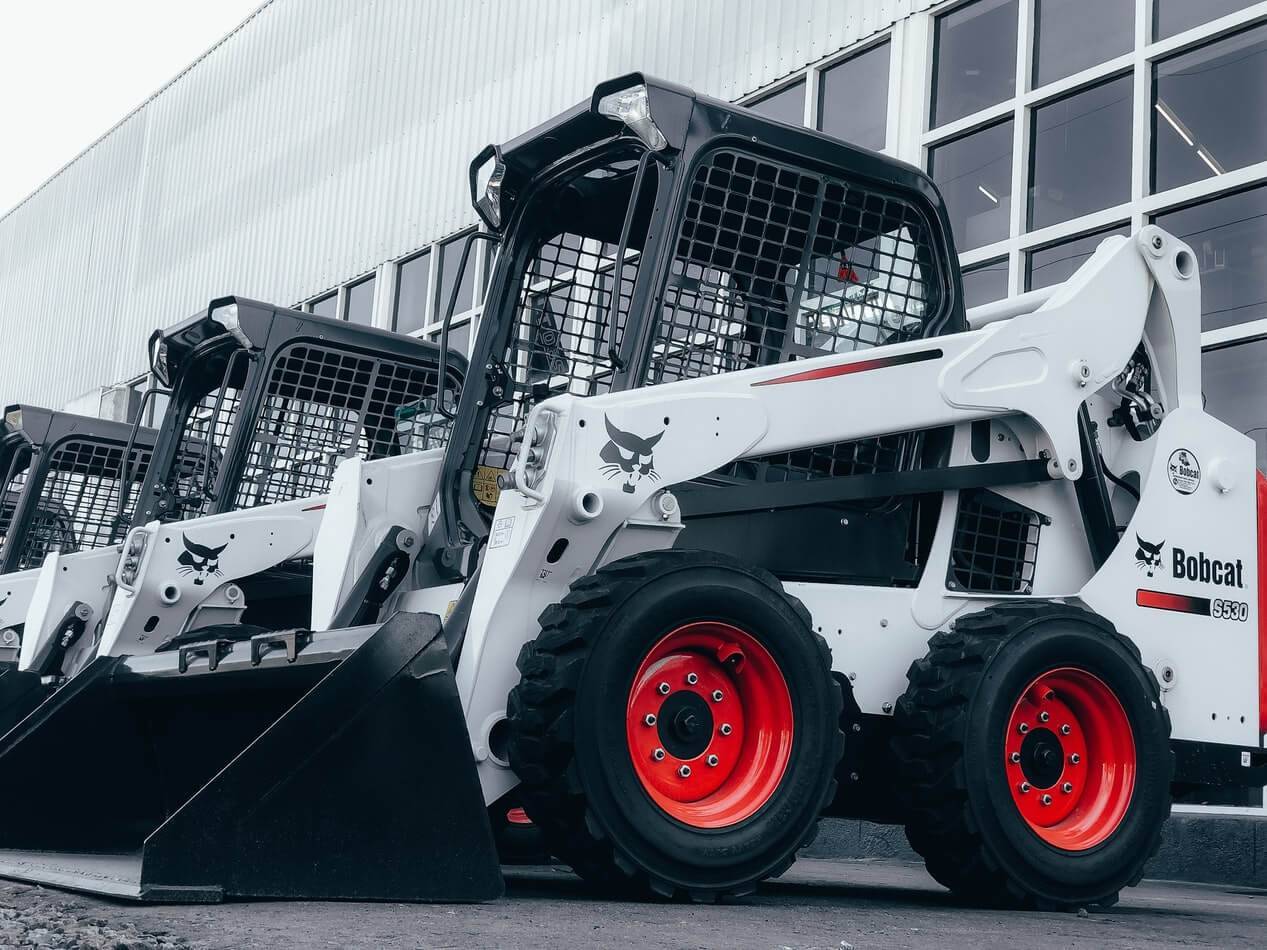
For yellow iron, excavators, bulldozers, skid steers, backhoes, and loaders, the ownership math is particularly favorable. This equipment holds its value well, is used regularly on most job sites, and can be modified with attachments to handle different work. Rental rates on heavy equipment are also among the highest in the industry.
Most established construction businesses eventually finance rather than rent for exactly these reasons. A financed machine builds equity, can be used as collateral for a loan against equipment if working capital is needed, and can be sold or traded when the business upgrades. A rented machine does none of those things.
For businesses with imperfect credit or limited history, bad credit heavy equipment financing programs exist that consider equipment value and down payment alongside credit history. The same general framework, credit, time in business, cash flow, down payment, and equipment condition, applies to both financing and leasing programs. Not qualifying for one doesn’t automatically mean not qualifying for the othe
Frequently Asked Questions
Can I lease or finance heavy equipment with bad credit?
Yes, in many cases. Both financing and leasing programs are available for applicants with imperfect credit, limited credit history, or startup status. Programs that focus on equipment value, down payment, and business cash flow can sometimes approve transactions that a standard bank would decline. Construction equipment financing programs at First Capital accommodate a range of credit profiles. Requirements vary by program, amount, and equipment type.
Is there a minimum credit score required to lease equipment?
Credit requirements depend on the lender and the specific program. Alternative equipment financing and leasing programs often look beyond credit score to factors like business bank activity, down payment, equipment condition, and time in business. Rental companies typically don’t run credit checks, but rental doesn’t build equity or help establish business credit.
What happens at the end of a lease?
It depends on the lease structure. A capital lease (dollar buyout or $1 buyout) leaves the business owning the equipment for a nominal end-of-term payment, effectively the same outcome as financing. An operating or fair market value lease gives the business three choices: buy the equipment at its current market value, renew the lease for another term, or return the equipment. The right structure depends on how long the business expects to need the equipment and whether ownership is the goal.
Can I finance or lease used construction equipment?
Yes. Programs for used equipment financing and leasing are widely available. The equipment’s age, hours, condition, and market value all factor into what programs are available and what terms apply. Equipment purchased from a dealer typically qualifies more straightforwardly than private-party purchases, which require additional documentation and title verification.
Does it make more sense to rent equipment at the start of a new business?
Sometimes, but not always. A new business that needs equipment to take its first contracts is often in a better long-term position financing the equipment than renting it for months while waiting to accumulate revenue. Some startup financing programs are specifically designed to get new businesses into equipment early, with down payment and collateral substituting for an established credit history. Renting longer than necessary to avoid a financing application can cost more than the financing itself would have.
The Right Choice Depends on Use, Not Just Cost
There’s no universally correct answer between financing, leasing, and renting heavy equipment. What matters is matching the structure to the actual situation: how often you’ll use it, how long you need it, whether ownership adds value to the business, and what your cash and credit position can support.
For most businesses using heavy equipment on a regular basis, financing is the most cost-effective long-term path. Leasing makes sense when flexibility at the end of the term has real value. Rental makes sense for genuinely short or occasional needs, and quickly becomes expensive when those needs extend.
First Capital works with businesses across the range of construction, transportation, and equipment-dependent industries. To explore financing and leasing options for your next piece of equipment, apply online or call to speak with an advisor.
Ready to compare your financing and leasing options?
Call 888-565-6692 to speak with a financing specialist.
Financial information disclaimer: This article is for general informational purposes only and does not constitute financial, legal, or tax advice. Financing and leasing terms, approval requirements, and program availability vary by applicant, equipment, lender, and program guidelines. Tax treatment of financing and leasing arrangements varies; consult a qualified tax professional for advice specific to your situation. All financing and leasing is subject to credit approval and program eligibility.